

Media
In the News
News media coverage of the Environmental Justice Health Alliance for Chemical Policy Reform and our affiliated and allied organizations.
Deidre Nelms
(802) 251-0203 ext. 711
dnelms[at]comingcleaninc.org
Related News
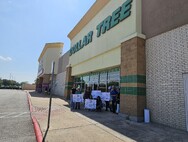
Dollar Tree expands chemical safety policy with new restrictions and greater supplier transparency
August 17, 2026
This year, Dollar Tree published an expanded Chemical Management Policy that commits to restrict more harmful chemicals in key private-label product categories, including food packaging, children’s products, and formulated products such as beauty, personal care and household cleaning products. “We applaud Dollar Tree’s efforts to eliminate chemicals linked to endocrine disruption, learning disabilities, cancer and reproductive harm from its shelves,” said José Bravo, Coordinator of the Campaign for Healthier Solutions. “Families deserve safe products and healthy food no matter where they shop.”
Read More
The Trump administration is deleting government data. From infant deaths to hunger, here are 5 ways it’s hurting Americans
May 7, 2026
Until last year, one of the best ways to find out if you live near one of the roughly 12,000 facilities that store hazardous, cancer-causing chemicals used in manufacturing products like pesticides or medical devices was to go to an EPA webpage for the Risk Management Program (RMP). There you could type in your zip code in a search tool, and see if any of these chemical factories are nearby. (Latino, Black and low-income people are more likely to bear the brunt of chemical pollution; they disproportionately live closer to chemical plants than other groups.) But last April, the Trump administration took down this tool. Now the only way to get this information is to drive to one of several dozen EPA reading rooms across the country to examine paper records. “You have a right to know what’s in your back yard,” said Maya Nye, federal policy director for Coming Clean, a non-profit environmental health collaborative. She said the removal of the tool is particularly concerning because “we haven’t figured out how to prevent chemical disasters and people are still experiencing them”.
Read More
Chemical Threats Nearby? Trump’s EPA Doesn’t Want You to Know.
April 14, 2026
Climate change is making the risk of disastrous chemical accidents more likely. But the EPA wants to gut recently enhanced safety requirements for hazardous facilities. Raschelle Grandison had just walked out her front door to grab something from her car on a chilly March morning in 2019 when she stopped dead in her tracks. Grandison stared in disbelief at what looked like a nuclear mushroom cloud approaching the Houston home she shared with her mother, who ran outside to see what was wrong. They were still watching the giant black cloud hurtling toward their neighborhood from the Houston Ship Channel when the shelter-in-place alerts started blaring. A massive fire had started at a bulk-liquid storage facility run by the Intercontinental Terminals Co. about 5 miles away after a faulty pump released naphtha, a highly flammable hydrocarbon used to make gasoline and plastic, from an 80,000-barrel tank.
Read More
Chemical Plants Keep Exploding, but Trump’s EPA Is Rolling Back Safety Rules Anyway
March 5, 2026
In 2024, the federal Environmental Protection Agency attempted to address the risk of chemical leaks through a rule called the Safer Communities by Chemical Accident Prevention. It promised a modest course correction, requiring dangerous plants to investigate past accidents, plan for climate-fueled disasters, give workers more power to halt unsafe operations, and, in some cases, switch to safer chemicals or processes. But last month, Trump’s EPA proposed gutting most of those safeguards before they ever took effect, moving to strip away requirements for safer technologies, climate and natural disaster planning, third-party safety audits, and strong worker participation in decision making. “For fenceline communities and facility workers, this rollback is a declaration that our lives are deemed acceptable sacrifices,” said Ana Parras, executive director of Texas Environmental Justice Advocacy Services, a group that has worked in several national coalitions around chemical safety.
Read More
Trump Is Using the Shutdown to Supercharge His War on Equity
October 9, 2025
As the federal government shutdown stretches into its second week, President Donald Trump is targeting nearly $30 billion in cuts to federal funding almost exclusively to Democratic states and cities. The impact of the cuts to public transit, energy projects, and fundamental civil rights programs could carry far-reaching harms across the nation and the economy. The cuts are the next step in the implementation of executive orders issued by Trump that strive to eradicate policies that advance racial and gender equity, tackle the climate crisis, and threaten the fossil fuel industry. "When the Biden-Harris administration came in, they did not just create plans in a vacuum, they went and listened to people in the community” to learn what projects were needed, “and financing flowed from those discussions,” Michele Roberts of the Environmental Justice Health Alliance. The programs included projects to address historic and ongoing environmental racism and injustices, and the disproportionate health and economic burdens in Black and Brown communities that followed.